Key Takeaways
- Donor sites often encompass the abdomen, flanks, back, thighs, and posterior arms. They are selected based on persistent fat deposits and each patient’s body type to generate harmonious results.
- Leslie Kremer MS, MD, FACS NOTES on fat harvesting From several donor sites can maximize overall contour by slimming trouble spots while supplying abundant, premium quality fat for transfer.
- Surgeons measure fat deposits, skin tone and anatomy to choose locations that augment the buttocks while reducing donor area side effects.
- Well-performed extraction and preparation employ small cannulas and centrifugation to protect viable fat cells. This increases survival and provides smoother, longer lasting results.
- Required fat volume depends on desired size, available reserves, and expected resorption. Thin patients may need alternative approaches or staged procedures.
- Your surgeon’s expertise in layered injection and aesthetic judgment is crucial for natural, symmetrical results and minimizing any risks of lumps or irregularities.
Where is fat taken for BBL? Harvested fat is processed and then injected into the buttocks to restore volume and shape.
Selection of site is based on volume of fat available, body contouring, and surgeon plan.
The following section explains each donor area and recovery.
Donor Sites
Donor sites refer to the body areas from which a surgeon extracts fat for a Brazilian butt lift. Surgeons select sites based on noticeable resistant fat, fat quality and how extraction will impact overall contour. Harvesting from multiple zones can enhance body contour and help make the end product more even. As the donor site is utilized to increase buttock volume, it simultaneously impacts the appearance of the donor region.
1. Abdomen
- The abdomen is typically the initial selection because many of us have a little extra padding in that region.
- Liposuction of the abdomen sculpts the waistline and provides a noticeable variation in proportion between the torso and hips.
- Getting rid of belly flab naturally flattens the stomach and creates abdominal curves that make your booty pop even more.
- Belly fat is typically good graft fat, but composition differs. Some locations are more fibrous and have to be treated with a softer hand.
With thin cannulas, sometimes in the 3 mm range, surgeons can harvest fat in a targeted way without damage to the tissue.
2. Flanks
- Flanks or love handles consistently provide viable fat and are selected to contour the waist.
- Liposuction here decreases lateral bulge and produces a smoother waist to hip line.
- Harvested flank fat typically requires little purification and grafts well into the buttocks.
- Flank liposuction eliminates bulges and enhances the hourglass effect.
Donor sites must be handled carefully; overharvesting can leave hollowed areas and impact graft survival.
3. Back
- Lower and mid back areas contain significant fat in many patients.
- For example, back liposuction can eliminate bra rolls and sculpt the upper posterior contour while aiding buttock projection.
- The back frequently provides ample volume, which is beneficial when larger transfers are required.
- Fat from the back can have inconsistent fibrous content.
Targeted techniques and small cannulas assist in extracting living cells.
4. Thighs
- Inner and outer thighs are great donor sites if you have them.
- Thigh liposuction slims legs and reduces saddlebags and assists overall proportion.
- Thigh fat tends to play nice after transfer and can fix hip dips when applied strategically.
- Surgeons straddle excision to prevent contour deformities.
Multiple little harvests beat one big scoop any day!
5. Arms
- Posterior arms can donate fat for certain patients but hardly ever have enough volume by themselves.
- Arm liposuction refines upper-arm contour and supplies harvest material.
- Most patients require arms with other sites to meet volume.
- Careful technique minimizes scarring and preserves natural arm contours.
Site Selection
Site selection determines where liposuction harvests fat for transfer to the buttocks and affects both the look of the buttocks and the reshaping of donor areas. Surgeons evaluate fat distribution, skin quality, and overall anatomy before recommending sites. Selection is personalized to match a patient’s goals and available fat reserves.
Strategic choices can enhance the buttocks while slimming other areas to create balanced proportions.
| Criterion | Why it matters | Impact on outcome |
|---|---|---|
| Fat volume available (metric: kg or g) | Enough viable fat needed for transfer | Affects achievable size and need for multiple donor sites |
| Fat quality (cell density, health) | Higher-cell density yields better graft survival | More durable, smoother augmentation |
| Skin elasticity | Determines how donor site will retract after liposuction | Better skin leads to cleaner contour and less sag |
| Patient anatomy (frame, fat pattern) | Guides which areas will give best aesthetic result | Tailors shape to body type for natural look |
| Surgical access & safety | Ease of harvest and lower complication risk | Shorter operative time, lower morbidity |
Fat Quality
| Donor site | Typical fat quality | Approx. graft survival* |
|---|---|---|
| Abdomen | Moderate to high density | 50–70% |
| Thighs (inner/outer) | High density, cohesive fat | 55–75% |
| Flanks/love handles | Moderate density | 45–65% |
| Arms | Lower volume, variable quality | 35–55% |
Regions containing concentrated, quality fat are best because they typically produce higher numbers of viable adipocytes post-processing. Purified fat harvested from those locations provides a silkier, extended duration contouring effect in the derriere.
If harvested fat quality is low, additional resorption can occur, decreasing augmentation and necessitating revision. Surgical technique and processing alter survival rates as the fat transfer science improves.
Patient Goals
Patient goals direct where fat is harvested. Grazing a patient desiring a dramatic hourglass appearance might have fat mobilized from the waist, flanks, and lower abdomen to highlight a narrow waist with full hips. Other patients might desire subtle augmentation with thigh fat for a softer transition.
Communicating clearly on desired butt shape, projection, and size allows the surgeon to plan what donor sites to use and whether to use multiple areas. Customizing the design for every body type increases satisfaction and guarantees donor-site sculpting enhances the overall outcome.
Body Contouring
Body contouring de-bulks flab from trouble spots to sculpt a more proportionate silhouette. It redirects volume to the buttocks for instant roundness and lift. Additionally, it is able to sculpt the abdomen and flanks to highlight a female’s smaller waist.
Results are immediate post-operatively and continue to improve over months as swelling diminishes. The first component of a BBL is liposuction for fat harvesting. Candidates must have enough fat in other places, and if one site is light on volume, several areas can be implemented.
Extraction Process
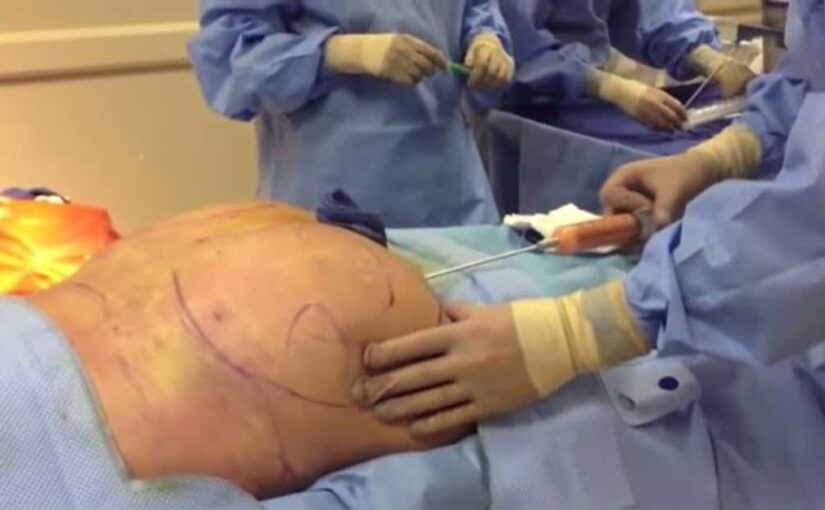
The fat for a BBL is harvested by liposuction, the initial phase of the operation. Surgeons harvest fat from one or more donor sites to have material for the butt lift. Typical donor areas are the stomach, flanks (love handles), lower back, inner and outer thighs, and even the arms. If one region isn’t fatty enough, multiple regions can be accessed in the same procedure.
Surgeons create tiny incisions to perform the procedures. These incisions are usually only a few millimeters in length, and anywhere from two to five cuts are made depending on how much fat needs to be extracted and where it lays. The site of each incision is selected to provide convenient access for extraction and later grafting of fat and to keep any resulting scars hidden in natural body folds or the bikini line.
For instance, an incision low on the abdomen can access both the stomach and flank and still be covered by underwear. A thin cannula, or tube, is then used through each incision to softly suction fat. The cannula is rocked back and forth in measured strokes to dislodge fat cells, then suction removes the fat.
Surgeons use small cannulas and gentle technique to minimize trauma to surrounding tissues and reduce bleeding and nerve protection. Working softly preserves the fat cells viable for transplantation. When fat cells get damaged during harvest, they won’t survive when transplanted to the buttocks, which decreases your end volume and contours.
Sophisticated processing and gentle handling increase fat survival. Surgeons employ low pressure suction or syringe aspiration and eschew high-heat or harsh treatment. The collected fat is typically processed, washed, filtered, or spun in a centrifuge for a few moments to eliminate fluids and compromised cells prior to re-injection.
This step enhances the graft quality and helps achieve a more predictable result. Proper post-extraction wound care minimizes the chances of post-extraction complications and scarring. Incisions require special attention the first few weeks to avoid infection and assist with healing them flat.
Some scarring is inevitable but can be reduced with aftercare, sun protection, and later on nonsurgical treatments like silicone sheets or laser therapy if necessary. The harvested, refined fat is now ready to be transferred and serves as the foundation of the buttock augmentation.
Fat Preparation
Fat preparation starts with a vision that connects where fat is harvested to how it will perform once injected. Fat grafting is a two-step surgical process: first, liposuction gently harvests viable fat cells from donor sites. Second, those cells are cleaned and readied for placement. Adipocytes are living organisms and their survivability post-transfer varies widely, approximately 50 to 90 percent, depending on surgeon technique and patient aftercare. That variability makes preparation crucial.
Checklist for fat preparation before injection:
- Indicate donor and recipient sites and verify volumes with the patient.
- Harvest fat with low-trauma liposuction cannulas and gentle suction to protect cell integrity.
- Collect aspirate in sterile containers and label clearly.
- Specialized centrifuge and filtration system to separate healthy fat from blood, oil, and debris.
- Drain and rinse fat as necessary to eliminate loose oil and surplus moisture.
- Select clean, healthy fat under magnification or using standard cell viability criteria.
- Load syringes with small aliquots for microdroplet injection.
- Keep fat at proper temperature and use immediately to prevent cell death.
- Document volumes transferred and areas treated for follow-up.
A special centrifuge machine is sometimes used to accelerate and standardize separation. Centrifugation spins the aspirate at regulated speeds to compress viable adipocytes while allowing oil and blood to remain on top. Other techniques are low pressure filtration or gravity separation, all of which try to produce a clean graft consisting mainly of intact fat cells and SVF components.
We want to implant tissue most likely to re-vascularize and live. We inject only purified, live fat into your buttocks for optimal results and reduced inflammation. Surgeons prefer the microdroplet technique. Many small passes place tiny fat parcels in multiple tissue planes. This maximizes surface area contact with surrounding tissue, which encourages new blood vessels to grow in and nourish the graft.
Dealing with the patient’s underlying musculature is key. Deposits of fat inserted in proper planes and along borders of muscle achieve contours that are more even and natural looking. Optimal fat preparation is critical to fat survival and a smooth, natural appearance.
Regardless of preparation, the biggest limitation of fat grafting is the unpredictability of the final result. Injected fat tends to last longer than fillers, potentially sticking around for a few years, whereas fillers need a refresh every 6 to 12 months. The science of fat transfer continues to evolve, and surgeons adjust technique to enhance predictability.
Volume Matters
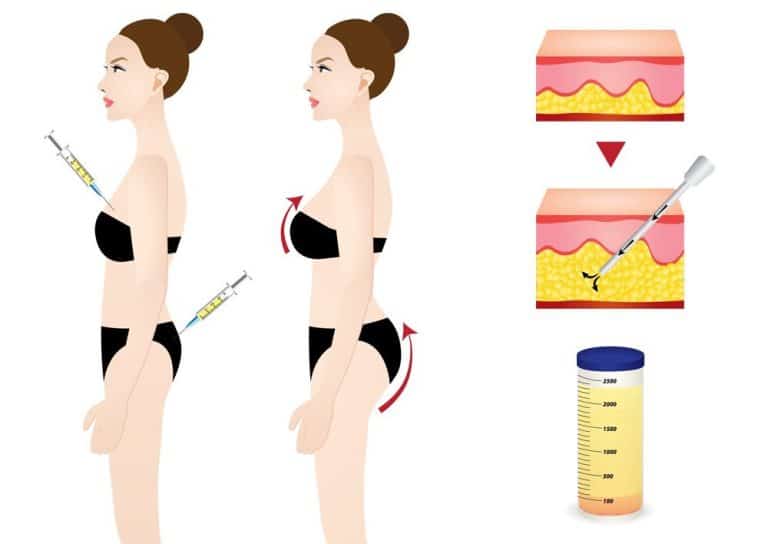
Volume in a BBL, in other words, is how much fat is transferred from donor sites into the buttocks, and it determines both size and ultimate contour. Volume matters. The process utilizes the patient’s natural fat cells instead of implants. Liposuction eliminates fat from the belly, back, flanks, and thighs via tumescent technique, which simultaneously anesthetizes the tissues and minimizes blood loss.
That fat is harvested, processed, and injected into the buttocks to create projection and shape. Surgeons schedule the cumulative volume to strike a balance between the patient’s objectives and what the body will tolerate.
Factors that affect the necessary fat volume for BBL include:
- Patient goals: desired size increase and contour profile.
- Body proportions: pelvic width, hip slope, and existing buttock projection.
- Donor fat availability: amount of fat in abdomen, flanks, back, and thighs.
- Tissue elasticity: skin quality and how well it can stretch to accommodate volume.
- Surgeon technique: number of injection layers and placement strategy.
- Expected fat resorption: percentage of grafted fat that will not survive.
- Safety limits: maximum safe liposuction volume based on patient health and anatomy.
Surgeons estimate necessary volume to attain a sculpted, balanced augmentation. They guess how much fat needs to be injected to hit their target after accounting for resorption. Not all of the harvested fat makes it through the transfer. Average survival rates differ; some patients lose some grafted fat in the weeks following surgery.
Surgeons frequently overfill a bit or stage to allow for natural loss and to achieve the long-term goal. For example, a patient wanting moderate enhancement might need 300 to 600 milliliters per buttock initially, while a larger change may need more, provided there is enough donor fat.
Thin patients with minimal fat stores may lack sufficient harvestable tissue to facilitate a significant transfer. Options include staged fat grafting, fat banking for future sessions, or talking implants with the surgeon. Tumescent liposuction is the standard because it enables safe, controlled fat extraction and maintains the quality of fat for grafting.
Recovery affects final volume as well. Nutrition with lean protein and healthy fats supports healing and graft take. Careful post-op recovery, avoiding pressure on the grafted sites and heeding the surgeon’s directions, aids in optimizing survival of the transplanted fat.
The Surgeon’s Artistry
A Brazilian butt lift combines body sculpting with meticulous surgical techniques to accentuate natural curves. Prior to harvesting or placement of any fat, the surgeon evaluates body shape, skin quality, and the patients’ aspirations to plan where the fat will be removed and placed. This planning is key to an outcome that appears natural and evolutionary, rather than surgical.
Surgeons carve fat from places that can best afford to lose it and that provide the best donor tissue. Some of the most common donor sites are the abdomen, flanks (love handles), lower back, inner and outer thighs, and occasionally the bra roll or upper arms. Choice of site is dependent on the amount of fat needed, the quality of that fat, and how its extraction will improve shape.
For instance, liposuction around the flanks and lower back can enhance the waist-to-hip ratio and make the buttock appear more round without adding volume.
Layered injection technique sculpts a rounder, fuller buttock. Fat is cleaned, prepared, and then injected in tiny parcels into various tissue planes and areas of the buttock to construct shape gradually. Working the fat in multiple layers provides nice smooth curves and minimizes the risk of lumps or irregularities.
The objective is an even appearance throughout the buttock, taking special care when transitioning from buttock to hip or thigh. Strategic positioning preserves security. Surgeons steer clear of deep muscle injections in several contemporary approaches to minimize the danger. Instead, they prefer the subcutaneous plane where fat grafts thrive.
Knowing anatomy, where nerves, vessels, and fascia lie, is crucial. This experience guides the surgeon in balancing quantity with safety and avoiding undesired shape changes. Scarring and incision placement are all part of the art. Incisions for liposuction and fat grafting are generally only a few millimeters in length and positioned where they hide, for example, in the bikini line, lower abdomen crease, or near the buttock crease.
The astute surgeon’s hands and eye allow for thoughtful insertion point placement and technique that minimize visible scarring and ensure even fat removal. The Earle Curve refers to a graceful, natural looking curve frequently desired in BBL results. It takes both surgical skill and an artistic eye to tailor enhancement to the patient’s proportions.
Surgeons personalize the blueprint so the transformation works for the entire body, not just the derriere. This mix of craft and judgment produces an organic, harmonious outcome that fits with the patient’s aspirations.
Conclusion
Fat for BBL comes from anywhere you have some extra. Typical areas are the abdomen, hips, flanks, and inner thighs. Surgeons select areas that provide sufficient volume and align with body contours. Liposuction instruments extract fat carefully. Teams purify, filter, and test the fat prior to grafting it into the buttocks. The more fat, the more shaping possibilities and greater likelihood of long-lasting results. Experienced surgeons layer the fat to aid its survival and sculpt a natural curve.
If you want a concrete plan, inquire about donor sites, typical volumes, and recovery measures. Schedule a consultation with a board-certified plastic surgeon to receive details for your particular physique.
Frequently Asked Questions
Where is fat typically taken from for a BBL?
Fat is most commonly taken from the abdomen, flanks (love handles), thighs and lower back. They select sites that have ample fat and good tissue quality to enhance graft viability and sculpt the body.
How do surgeons decide which donor sites to use?
During your consultation, surgeons evaluate your body shape, fat distribution, and objectives. They choose locations that provide adequate volume and enhance overall shape while avoiding prominent scarring.
Is fat taken from multiple donor sites for better results?
Yes. Multiple donor sites can provide not only more fat but better harvest quality and smoother contouring. It aids in donor-area symmetry and diminishes bumpiness.
How is fat extracted during the BBL procedure?
Fat is extracted with gentle liposuction using tiny cannulas and low suction pressure. This maintains fat cell integrity, which makes fat graft survival in the buttocks more likely to be successful.
What happens to the fat after extraction before injection?
Fat extracted is purified and prepared by filtration or low-speed centrifugation. This eliminates fluids and damaged cells, resulting in healthier fat that has better survival rates upon transfer.
Can fat be taken from areas with very little fat?
If you are excessively underfat, choices run thin. Your surgeon can utilize smaller grafts, suggest weight gain prior to surgery, or talk through alternatives like implants.
Will donor-site scarring be noticeable after fat removal?
Scars are generally very small (a few millimeters) and placed in hidden locations. Good surgical technique and wound care help keep scars to a minimum. Many scars do fade considerably with time.